Blog
High Mileage Superbike: How Many Kilometres Is Too Many?

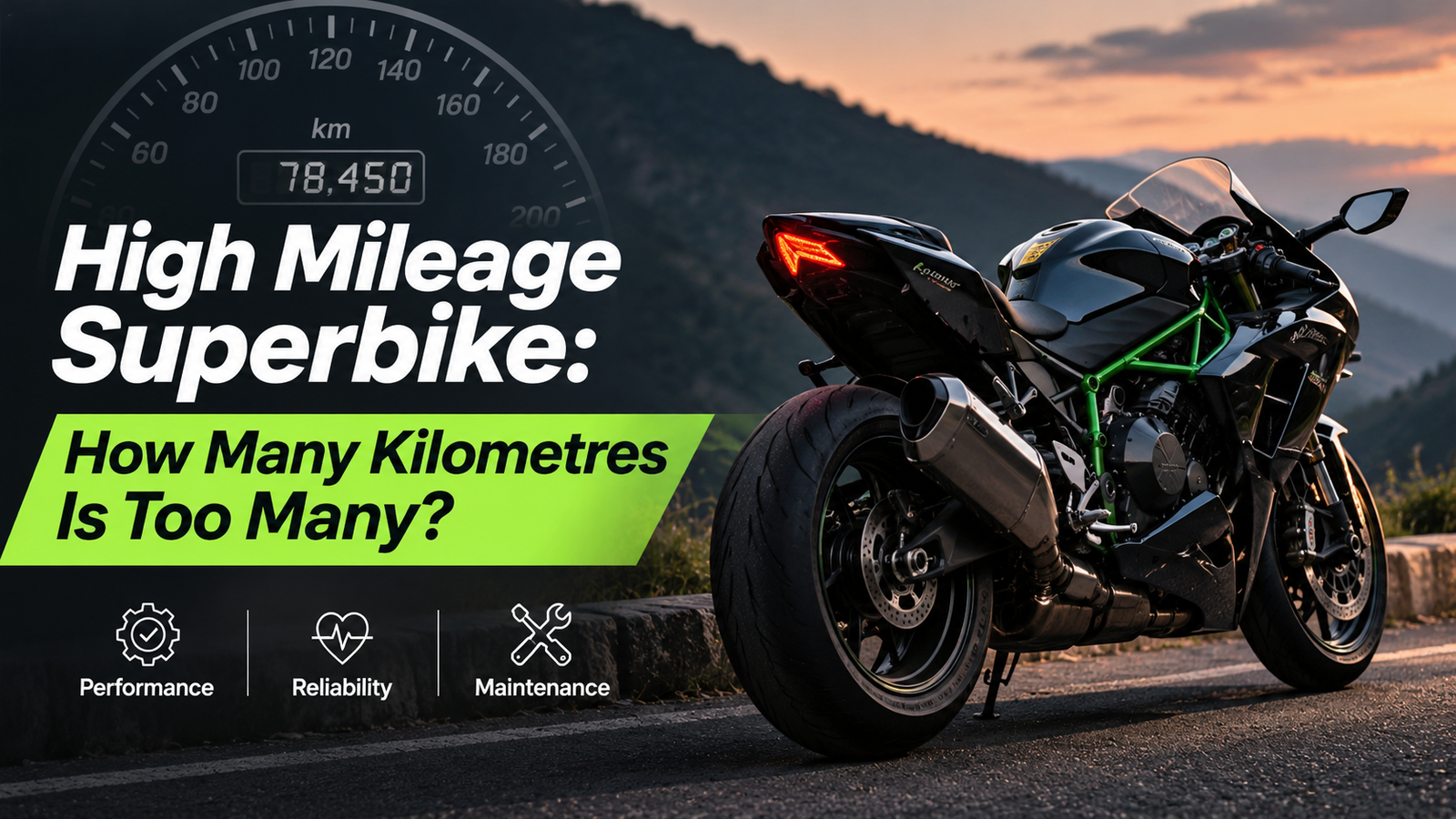
There is no single kilometre figure that makes a superbike a bad buy. A high mileage superbike with full service records and honest wear can be a safer purchase than a low-kilometre bike that spent three years standing in a basement. What matters is how the kilometres were put on, how the bike was looked after, and whether the asking price reflects the reading.
Short answer: For most well-serviced superbikes, 30,000 to 50,000 km is not a problem in itself. Japanese inline-fours in particular are known for long engine life when oil changes are kept up. Worry less about the number and more about missing service records, signs of odometer tampering, and wear that doesn’t match the reading.
Why the Odometer Reading Alone Doesn’t Tell You Much
Two bikes can show the same 25,000 km and be in completely different health. One may have done long highway rides to Jaipur and Chandigarh, with every oil change on time. The other may have spent its life in Gurugram stop-and-go traffic, cooking in 45°C heat, with a service skipped here and there.
Highway kilometres are usually gentler on an engine. The revs stay steady, the engine runs at its proper temperature, and the clutch barely works. City kilometres are harder: constant clutch use, heat soak while idling, and short trips where the oil never fully warms up.
So treat the odometer as one clue, not the verdict.
How Many Kilometres Is Normal for a Used Superbike?
A lot of superbikes in India are weekend machines, so many used ones show lower readings than a daily commuter bike of the same age. Instead of chasing a magic number, use these bands as a rough guide. They are a general rule of thumb, not a manufacturer limit.
| Odometer reading | What it usually means | What to check |
|---|---|---|
| Under 10,000 km | Light use, often a weekend or showroom-kept bike | Tyre age, battery health, signs the bike sat unused for long periods |
| 10,000 to 30,000 km | Normal use over a few years of ownership | A service bill for each interval, chain and sprockets, brake pads |
| 30,000 to 50,000 km | Well-used, often toured | Whether major services were done (valve clearance check, suspension service), clutch condition |
| Over 50,000 km | High mileage for a superbike in India | Complete records, an engine health check by a brand specialist, a price that reflects the reading |
Engine type changes the picture
Japanese inline-four engines, such as those in the Kawasaki Z900, Kawasaki Ninja ZX-10R and Suzuki Hayabusa, have a strong reputation for running long distances when maintained on schedule. The BMW S 1000 RR is also an inline-four, but parts and labour cost more, so its service history matters even more.
Ducati twins and V4s use a Desmodromic valve system. “Desmo” means the valves are opened and closed mechanically instead of being closed by springs. These engines need a valve clearance check at fixed intervals listed in the owner’s manual, and that service is one of the bigger bills of Ducati ownership. On a used Ducati, ask for proof that the last Desmo service was done on time. Our guide on superbike maintenance cost in India explains what these services usually involve.
When Low Kilometres Can Be a Warning Sign
A bike that barely moves can develop its own problems. Low kilometres sound great on paper, but a superbike that sat for years often needs money spent before it is safe to ride hard.
Watch for these signs on a low-km bike:
- Old tyres. Rubber hardens with age even without use. Check the four-digit date code on the tyre sidewall (for example, 2321 means week 23 of 2021). Hard, cracked tyres need replacing, whatever the tread depth.
- Dry fork seals. Seals that sit unused can start leaking once the bike is ridden again.
- A tired battery. Long periods without charging shorten battery life.
- Fuel problems. Old fuel left in the tank can leave deposits in the fuel system.
- Rust and corrosion. Look at the chain, bolts, exhaust joints and brake discs.
Very low kilometres on an older bike also deserve one simple question: why? There is often an honest answer, such as a second bike or a long work posting abroad. If the answer doesn’t fit the bike’s condition, look closer.
How to Check if the Odometer Reading Is Real
Digital instrument clusters can be altered with the right tools, so never take the number on the screen at face value. Use these checks together:
- Match the service invoices. Each bill should show a date and an odometer reading. The readings should rise steadily over time. A gap of two years with no bills needs explaining.
- Ask for authorised service records. Brand service centres keep job cards against the bike’s chassis number (VIN). With the owner’s help, you can often confirm past readings directly.
- Compare wear with the reading. Worn footpeg rubbers, polished grips, a flattened seat, faded switchgear and a scratched tank pad all point to heavy use. They should not appear on a bike claiming 6,000 km.
- Look at the wear parts. If a “low-km” bike has recently had new tyres, a new chain set and new brake pads, ask why so much was replaced.
- Get a brand specialist to inspect it. On some modern bikes, a diagnostic tool can read stored data from the ECU (the engine’s control computer), which can help confirm usage.
For more warning signs, read our guide on how to buy a used superbike without getting scammed and our checklist of things to check before buying a used bike.
What Wears Out on a High Mileage Superbike
Higher kilometres mean some parts are due, or close to due. None of these are reasons to walk away. They are costs to factor into the price you offer.
- Chain and sprockets: check for stiff links, hooked sprocket teeth and too much slack.
- Tyres: superbike tyres don’t last long under spirited riding. Our post on superbike tyre cost in India covers prices and tyre life.
- Clutch: if the revs climb but the bike doesn’t pull harder in a high gear, the clutch may be slipping.
- Brake pads and discs: look for thin pads and grooved or warped discs.
- Suspension: oil on the fork legs means leaking seals. A rear shock that keeps bouncing after a bump is worn.
- Bearings: notchy steering or play in the wheels points to worn steering head or wheel bearings.
- Cooling system: check coolant level, hoses and the radiator for damage.
Should You Buy a High Mileage Superbike?
A well-kept high-km bike can be one of the smartest ways into a bigger motorcycle. It suits you if you want more bike for your budget, ride a lot yourself, and can set money aside for a major service soon after buying.
Pros
- Lower purchase price than a similar low-km bike
- Early faults have usually shown up and been fixed already
- The biggest drop in value has already happened
Cons
- Wear parts may be due soon after purchase
- Lower resale value when you sell it later (see how to calculate your bike’s resale value)
- Missing records are a much bigger risk at high kilometres
Skip it if the records are patchy, the seller avoids questions, or you can’t afford a big service bill in the first few months.
Making Sense of the Number
A high mileage superbike is not automatically a risk, and a low reading is not automatically a bargain. Buy the bike’s history, not its odometer. Full service records, wear that matches the reading, and a price that reflects the kilometres will tell you far more than the number alone.
Every bike at Petroheadz goes through inspection before it is listed, and the team can walk you through a bike’s service history before you decide. Browse the current stock in Our Garage, or contact the Petroheadz team to ask about any bike’s kilometres and records. Planning to sell a high-km bike of your own? Get a quote on the Sell Your Bike page.
Frequently Asked Questions
Is 20,000 km a lot for a used superbike?
No. For a superbike that has been serviced on schedule, 20,000 km is normal use. Check that each service interval has a matching bill and that the chain, tyres and brakes are in good shape.
How long does a superbike engine last?
There is no fixed figure. Engine life depends far more on oil changes, riding style and heat management than on distance. A well-maintained engine can run for many tens of thousands of kilometres, while a neglected one can fail much sooner.
Is a low-km used superbike always the better buy?
Not always. A bike that sat unused for years can have hardened tyres, leaking fork seals, a weak battery and fuel system deposits. Ask why the reading is low and check that the bike’s condition matches it.
Can the odometer on a digital superbike be rolled back?
Yes, digital clusters can be altered with the right tools. That is why you should match the reading against dated service invoices, authorised service centre records and visible wear on the bike.
Does high mileage reduce a superbike’s resale value?
Yes. Kilometres are one of the main factors buyers and dealers use to price a used bike. Good service records and clean condition reduce the hit, but a high-km bike will usually sell for less than a similar low-km one.


 Sports Bike
 Touring
 Adventure
 Urban/Classic Bikes
 Roadster
 Cruiser