Blog
How to Calculate the Resale Value of Your Bike in India

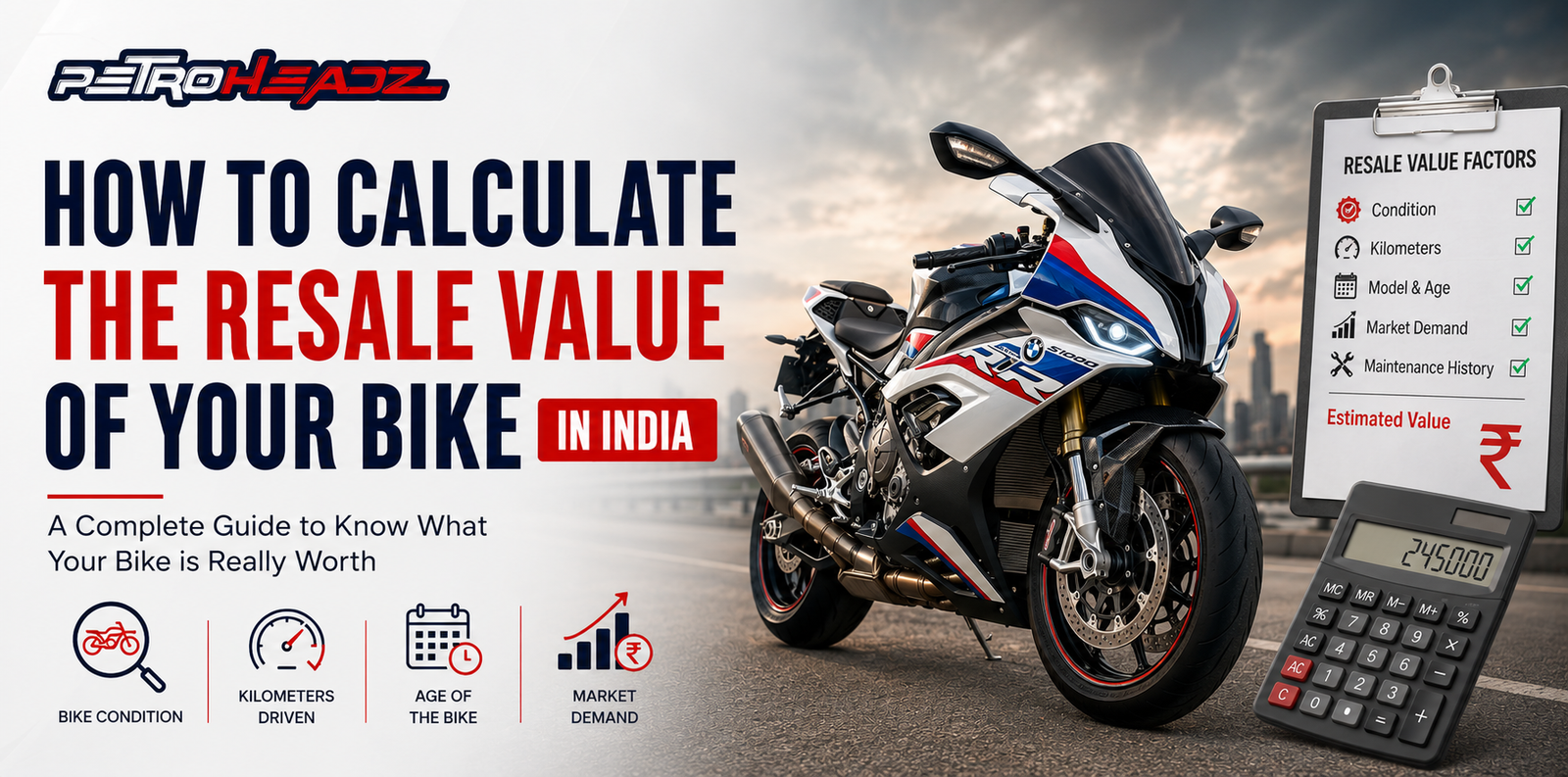
If you’re planning to sell or upgrade your motorcycle, the first question is almost always the same: what is my bike actually worth today? Bike resale value in India isn’t a fixed number pulled from a chart. It moves with the bike’s condition, market demand, documentation, and how well it has been maintained. Understanding how this works helps you set a realistic price and avoid leaving money on the table.
This guide walks through the real factors that go into motorcycle resale value, how a used bike valuation is typically arrived at, and what you can do before selling to get a fair number.
What Determines Bike Resale Value
Resale value isn’t guesswork, even though it can feel that way when two similar-looking bikes get very different offers. A few things consistently move the number.
Age and odometer reading. A bike’s age combined with kilometres run gives buyers a sense of how much life is left in the engine, drivetrain and consumables. Two bikes of the same year with very different mileage will not fetch the same price.
Overall mechanical condition. Engine health, gearbox smoothness, brake response and suspension feel all matter. A bike that starts easily, rides smoothly and has no unusual noise will always be valued higher than one that needs immediate work.
Service history. Buyers pay more for a bike with a documented, consistent service record. It signals the machine was looked after rather than run until something broke.
Ownership history. A single-owner bike with a clean transfer trail is easier to sell and usually commands a better price than one that has changed hands multiple times.
Tyres, brakes and consumables. These are the first things a serious buyer checks physically. Worn tyres or a brake system needing attention will get factored into any offer, sometimes more heavily than sellers expect.
Original versus aftermarket parts. Bikes with original components, unmodified exhausts and factory paint tend to hold value better than heavily customised ones, since not every buyer wants to inherit someone else’s modifications.
Registration state and documentation. Clean paperwork, valid registration and a straightforward transfer process add real value. Missing documents or an interstate registration mismatch can complicate a sale and affect the price a buyer is willing to pay.
Insurance status. An active or easily renewable insurance policy makes the bike more attractive to a buyer who wants to ride it immediately after purchase.
Market demand for the model. Some models simply hold their value better because spare parts are easier to find, the brand has a strong resale reputation, or the model remains popular among riders.
How a Bike Price Calculator Works
A bike price calculator, whether used informally by a buyer or applied by a dealer, generally works backward from the bike’s original or current market price and then adjusts for depreciation and condition.
The typical approach looks like this:
- Start with the current on-road price of a comparable new or lightly used model.
- Apply a depreciation percentage based on the bike’s age.
- Adjust up or down based on the odometer reading against the expected average for that age.
- Factor in mechanical condition, tyres, brakes and any visible wear.
- Adjust for service history and ownership count.
- Account for documentation status and ease of transfer.
- Compare against what similar bikes are currently listed and selling for in the same city.
This is why two bikes from the same year and model can still be priced differently. A calculator gives a starting range, but the final number depends on a physical inspection and how the bike compares to others currently available in Gurgaon and Delhi NCR.
Depreciation: What to Expect
Motorcycles lose value fastest in the first two to three years, then depreciation tends to slow down if the bike is well maintained. Premium superbikes from brands like BMW, Ducati, Kawasaki, Triumph and Harley-Davidson often hold value better than mass-market bikes, provided service history is intact, and the bike hasn’t been heavily modified. A bike that has missed services or shows signs of neglect will depreciate faster than one on a consistent maintenance schedule, regardless of brand.
Quick Checklist Before You Get a Valuation
- Gather all service records and invoices.
- Keep the RC, insurance, and PUC documents ready.
- Get tyres and brakes checked, and address anything minor before showing the bike.
- Wash and detail the bike so condition is easy to assess visually.
- Note the exact odometer reading and confirm it matches the service history.
- Check whether the registration is in your name and transfer-ready.
- Compare listings of similar bikes in your city to understand the current range.
Getting the Most Accurate Valuation
Online calculators and rough estimates are useful for a starting point, but the most accurate bike resale value comes from a physical inspection. A trained eye can catch things a form-based calculator can’t, from subtle engine sounds to frame condition. If you’re in Gurgaon or elsewhere in Delhi NCR, a hands-on evaluation by someone who deals in premium pre-owned superbikes daily will give you a far more realistic number than an online estimate alone. Riders outside Delhi NCR can usually still get a valuation done remotely with photos and documents, followed by a physical check when the bike is picked up as part of Pan India delivery arrangements.
 Sports Bike
 Touring
 Adventure
 Urban/Classic Bikes
 Roadster
 Cruiser