Blog
BMW S1000RR vs Kawasaki ZX-10R: Which Holds Resale Value Better in India?

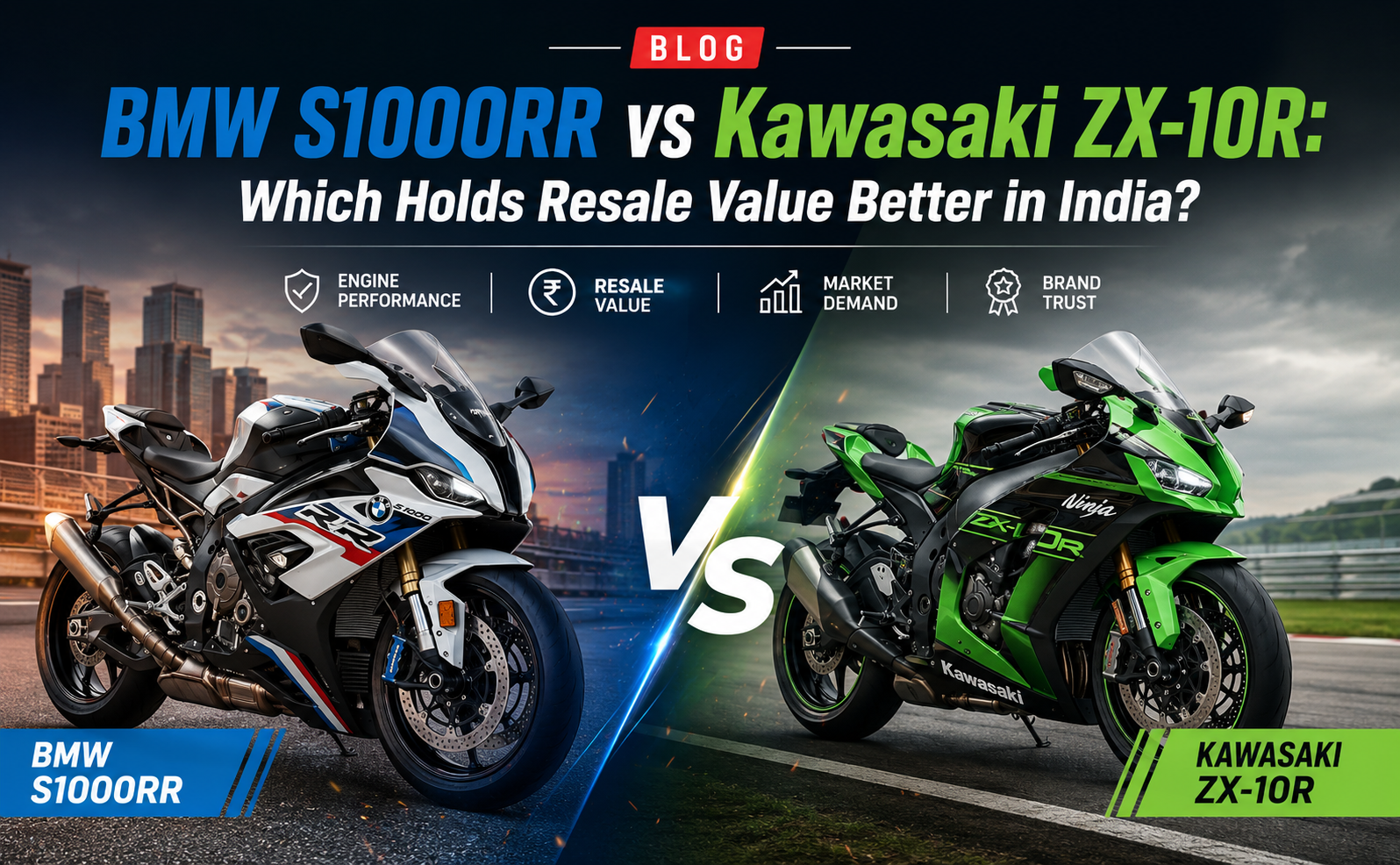
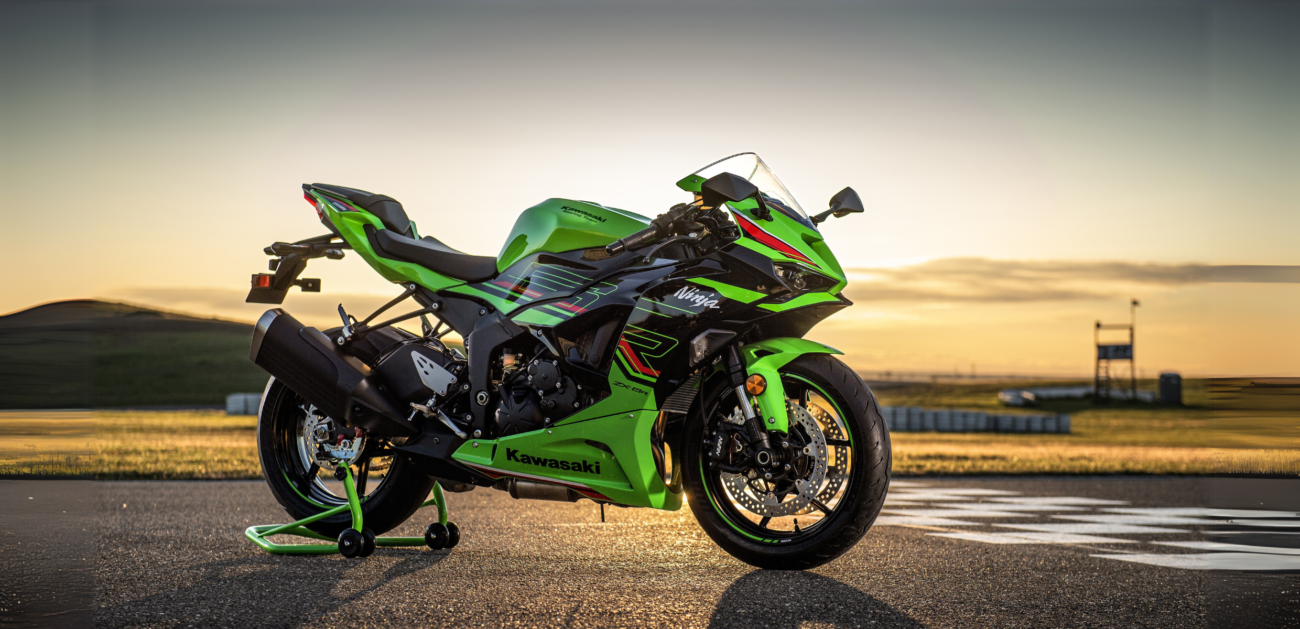
BMW S1000RR vs Kawasaki ZX-10R resale value is one of the most common questions we get from buyers shopping the top end of the litre-class superbike market in India — and for good reason. The two sit in the same conversation constantly: similar performance bracket, similar price range, similar appeal to riders who want a genuine track-capable machine that can also be lived with on the road. But when it comes time to sell, they don’t behave the same way in the used market. Here’s an honest look at how each holds value, and why.
Why Resale Value Deserves as Much Attention as On-Road Price
Buyers obsessed with the on-road price often overlook the fact that a superbike’s real cost is the gap between what you pay and what you get back when you sell. On a ₹20 lakh bike, a five-percentage-point difference in resale retention over three years is a genuinely large sum of money — often larger than any discount you negotiated at purchase. For a segment where owners frequently upgrade every two to four years, this matters more than it does for a bike you plan to keep for a decade
The BMW S1000RR: Strong Brand Pull, Higher Service Costs
What Works in Its Favor
The S1000RR carries genuine brand cachet in India. BMW Motorrad has built a loyal following, and the S1000RR specifically benefits from its motorsport pedigree and consistently strong reviews across generations. In the used market, this translates to real demand — buyers actively search for used S1000RRs, and a well-maintained one doesn’t sit on listings for long.
The bike’s electronics package (multiple ride modes, quickshifter, advanced traction control) has aged well across model years, meaning even a few-year-old used S1000RR still feels genuinely current to a buyer, which supports resale value in a way that bikes with dated electronics don’t enjoy.
What Works Against It
Service and parts costs are the recurring theme in every conversation about long-term BMW ownership in India. Authorized service centers are concentrated in metro cities, parts often need to be imported or sourced through limited channels, and routine service costs are noticeably higher than for the Kawasaki. This doesn’t kill resale value, but it does narrow the buyer pool — some riders who’d otherwise want an S1000RR talk themselves out of it once they price out three years of ownership costs, and that hesitation shows up as slightly longer time-to-sale in the used market, even when the eventual price achieved is strong.
Import-dependent parts availability also means that if a used S1000RR has any deferred maintenance or a part on backorder, it can sit unsold for longer while a buyer waits, compared to a bike where parts are more readily available.
The Kawasaki ZX-10R: Broader Buyer Pool, More Predictable Ownership
What Works in Its Favor
The ZX-10R benefits from a wider service network and generally lower running costs relative to the BMW, which meaningfully broadens its pool of realistic buyers in the used market. It’s also built a strong reputation through its WorldSBK association, giving it real credibility with performance-focused riders without the ownership-cost hesitation that follows the BMW.
Because Kawasaki has a longer-established presence across more Indian cities, parts availability and service turnaround tend to be faster and more predictable. For a used-bike buyer, “can I actually get this serviced without hassle where I live” is a real factor in the decision, and the ZX-10R answers that question more comfortably for buyers outside the top two or three metros.
What Works Against It
The ZX-10R doesn’t carry quite the same brand prestige as the BMW badge in the Indian market — this is a perception factor more than a mechanical one, but perception drives resale price. Buyers shopping in this bracket are often making an emotional purchase as much as a rational one, and “BMW” as a badge does carry weight in that decision independent of the bikes’ actual comparative performance.
Model year matters more for the ZX-10R’s resale value than it does for the S1000RR, since Kawasaki’s update cycle has, in some generations, brought more significant changes than year-to-year BMW updates — meaning a ZX-10R that’s a couple of model years behind the current one can see a sharper relative value drop than an equivalently aged S1000RR.
Head-to-Head: Where Each One Wins
Faster sale, broader buyer pool: Kawasaki ZX-10R. Lower ownership cost anxiety means more buyers are willing to pull the trigger, so ZX-10Rs in good condition typically move faster in classifieds and dealer inventory.
Higher absolute resale price for well-maintained examples: BMW S1000RR. Brand pull and the halo effect of the badge tend to support a higher achievable sale price, especially for lower-mileage examples with full service history.
Lower total cost of ownership, which indirectly protects resale value: Kawasaki ZX-10R. Because running costs are lower, ZX-10R owners are statistically more likely to keep up with full service history, and a complete service record is one of the single biggest factors in resale value for either bike.
Better resale stability across model years: BMW S1000RR, because its year-to-year updates tend to be more incremental, so a two-year-old bike doesn’t feel as dated next to the current model as sometimes happens with the Kawasaki.
What Actually Determines Resale Value More Than the Badge
Regardless of which of these two you’re comparing, a few factors matter more than the brand debate:
- Service history completeness. A ZX-10R with full documented service history will out-resell an S1000RR with gaps in its records, and vice versa. This is the single largest lever either owner controls.
- Accident and damage history. Both bikes lose value dramatically if there’s any history of a drop or accident, disclosed or discovered later. This matters more than the brand comparison.
- Mileage relative to age. A low-mileage bike that’s a few years old typically resells better than a higher-mileage bike of the same age, for both brands.
- Modifications. Tasteful, reversible modifications (exhaust, frame sliders) have minimal impact either way. Extensive ECU tuning or non-reversible changes can actually hurt resale value for both bikes, since many buyers specifically look for unmodified, stock-condition machines.
- Color and variant. This sounds trivial but genuinely affects resale speed for both bikes — certain color schemes and special editions consistently move faster in the used market than others.
Which Should You Buy If Resale Is Your Priority?
If your primary goal is minimizing total cost of ownership and maximizing the chance of a quick, hassle-free sale down the line, the Kawasaki ZX-10R is the more conservative choice — lower running costs, broader service network, and a wider buyer pool when it’s time to sell.
If you’re prioritizing the highest achievable resale price on a well-maintained, low-mileage example, and you’re comfortable with (or already budgeting for) higher service costs during ownership, the BMW S1000RR tends to command a stronger price at the top end of the used market, particularly for buyers specifically seeking the badge.
Neither answer is universally “correct” — it depends on how long you plan to own the bike, how disciplined you’ll be about service history, and how much weight you personally place on brand versus running cost.
Comparing Actual Listings
Resale value discussions are useful in the abstract, but the real answer for your situation depends on specific bikes, mileage, and condition available right now. We currently list both the BMW S1000RR and comparable Kawasaki litre-class bikes, each with full inspection reports and service history documentation, so you can compare actual examples rather than averages. If you want a direct, bike-specific comparison for your budget, reach out to our team, and we’ll walk you through what’s currently available in each.
The Bottom Line
The S1000RR and ZX-10R both hold value reasonably well in India’s still-maturing superbike resale market, but they get there differently — the BMW through brand pull and a strong ceiling price, the Kawasaki through lower ownership friction and a broader buyer pool. Whichever you choose, the factors that matter most for protecting resale value — full service records, clean accident history, and reasonable mileage — are within your control regardless of the badge on the tank.
 Sports Bike
 Touring
 Adventure
 Urban/Classic Bikes
 Roadster
 Cruiser