Blog
How to Finance a Used Superbike in India Without Costly Surprises

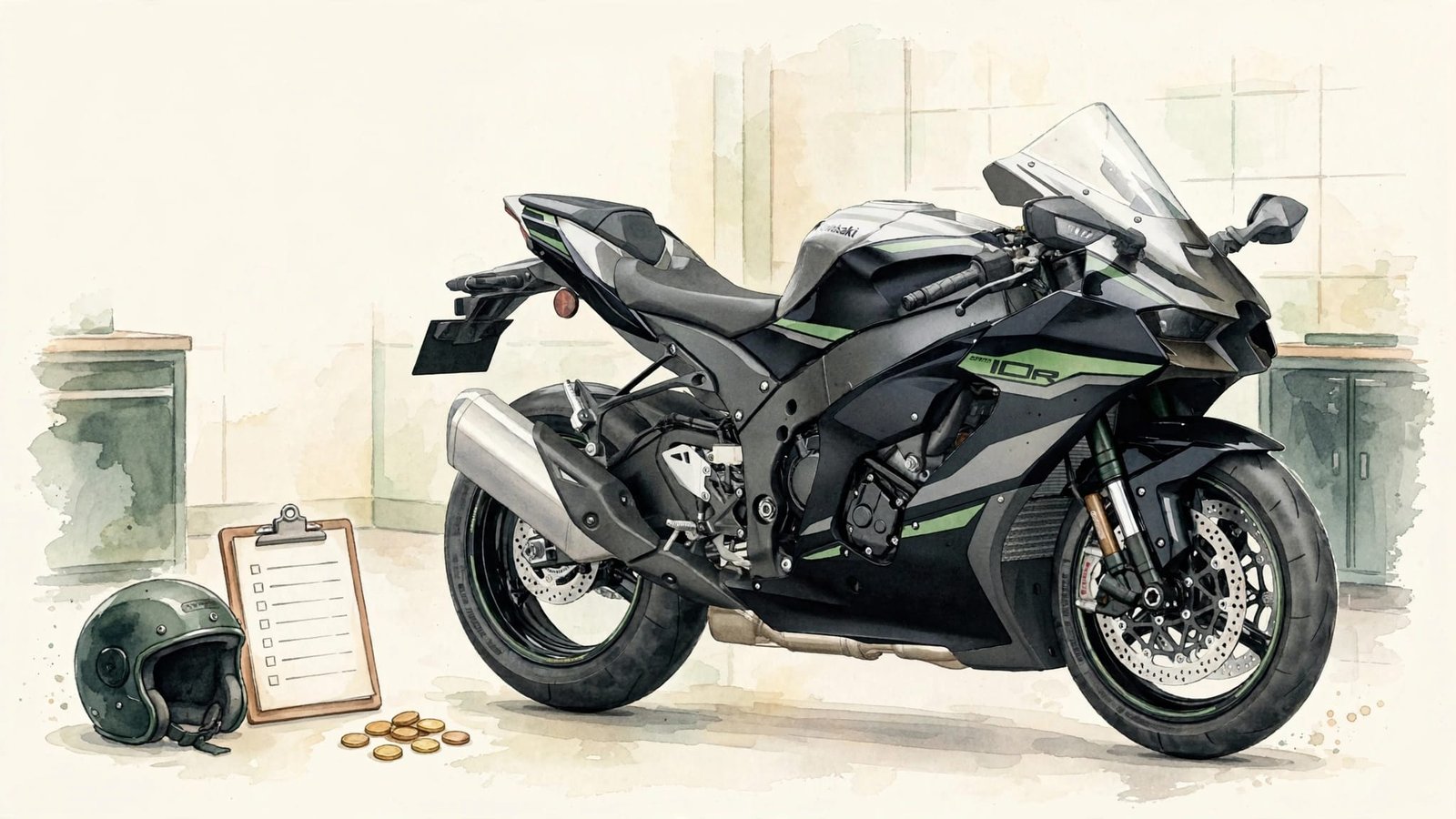
The Kawasaki Ninja you want might fit your monthly budget, but financing a second-hand motorcycle can still bring loan and paperwork surprises. A manageable EMI is only one part of financing a pre-owned performance bike.
A used superbike loan in India depends on both your finances and the motorcycle the lender agrees to fund. Before paying a booking amount, work out your cash requirement, inspect the bike, and check that its ownership can be transferred.
Set a budget beyond the asking price.
Start with the amount you can spend upfront on the motorcycle purchase, then compare the seller’s used superbike price with the lender’s assessed value. If the used bike valuation comes in lower, you’ll need to cover the funding gap as well as the required down payment.
Keep a separate reserve for insurance, transfer charges, riding gear, and immediate maintenance. Premium tires, brake parts, or an overdue service can turn an affordable-looking purchase into a tight first year.
Compare listings for similar models, such as a Kawasaki Ninja, by year, mileage, and condition before settling on a price. A well-documented bike may cost more than a cheaper example with gaps in its history. Petroheadz’s used superbike buying guide provides a broader checklist for comparing candidates before you arrange finance.
Compare used superbike loan options in India.
When exploring used bike finance, you can approach a lender directly, ask a dealer to arrange finance, or use an unsecured personal loan. These bike loan options differ in what the lender checks and how the bike’s registration is affected.
Bank or NBFC vehicle finance
Some banks and non-banking financial companies offer a two-wheeler loan for pre-owned bikes. IDFC FIRST Bank, for example, lists a pre-owned two-wheeler loan product. Confirm directly whether financing is available for your superbike’s model, age, registration state, and seller type, and check current rates, fees, eligibility, and terms. An advertised product doesn’t guarantee approval for every high-value model; luxury motorcycles such as a Kawasaki Ninja may fall outside a lender’s criteria.
With a secured vehicle loan, the financier’s interest is recorded against the bike until the loan is closed. Parivahan provides Form 34 for entering a hypothecation agreement after registration.
Dealer-arranged finance or a personal loan
A specialist dealer may introduce you to a lending partner and help gather the bike’s records. Still, the lender sets the sanction amount and terms. Ask for the lender’s name and written offer before treating a dealer’s EMI estimate as final.
A personal loan can be an option if vehicle finance isn’t available. It generally won’t add vehicle-loan hypothecation to the RC, but you remain responsible for repayments. Compare its total borrowing cost, not its approval speed alone.
Find out what you can borrow before choosing a bike.
Ask lenders for an indicative assessment before you commit to a seller. They may check your income, existing EMIs, credit history, and employment or business records. They may also assess a secondhand superbike’s age, condition, and valuation. Requirements differ, so verify the current criteria for your application.
Prepare your PAN, identity and address proof, bank statements, income proof, and any other documents the lender requests. Salaried applicants may need payslips; self-employed buyers may be asked for business and tax records. The bike’s RC, insurance details, and sale information will matter too.
An early eligibility check gives you a useful budget ceiling, not final approval. Final sanction can change after the lender examines the motorcycle and its documents. Before you pay a non-refundable booking amount, ask which conditions remain open and get the refund terms in writing.
Compare total repayment, not only the EMI
A smaller EMI can hide a longer repayment period. Request each offer’s loan amount, annual interest rate, repayment schedule, processing fee, applicable taxes, and other charges in writing. Then compare the APR or equivalent all-in borrowing figure, where available, alongside the total amount repayable.
Run the numbers on one offer.
This illustration uses assumed terms, not a current lender quote. Say a bike costs ₹8 lakh; you pay ₹3 lakh upfront and borrow ₹5 lakh at 14% annual interest on a reducing balance for 36 months.
| Item | Illustrative amount |
|---|---|
| Monthly EMI | About ₹17,089 |
| Total of 36 EMIs | About ₹6.15 lakh |
| Assumed processing fee | ₹10,000 |
| Down payment plus EMIs and fee | About ₹9.25 lakh |
The roughly ₹9.25 lakh excludes taxes on fees, insurance, transfer costs, and maintenance. The example shows why the purchase price alone doesn’t describe the cost of a financed bike.
Check charges that appear later.
Ask whether the lender charges for valuation, documentation, late payments, partial prepayment, or foreclosure. Find out whether insurance is bundled, optional, or subject to the lender’s requirements. Check when each charge is due and whether any fee is deducted from disbursement.
If a quote gives a flat interest rate, ask for its reducing-balance equivalent and full repayment schedule. Compare written figures for the same loan amount and tenure. Otherwise, two attractive EMIs may describe very different borrowing costs.
Inspect the motorcycle before applying for final sanction
Loan approval won’t reveal whether an engine has been neglected or a frame repaired. Arrange an independent inspection, especially for a modified, imported, or older bike.
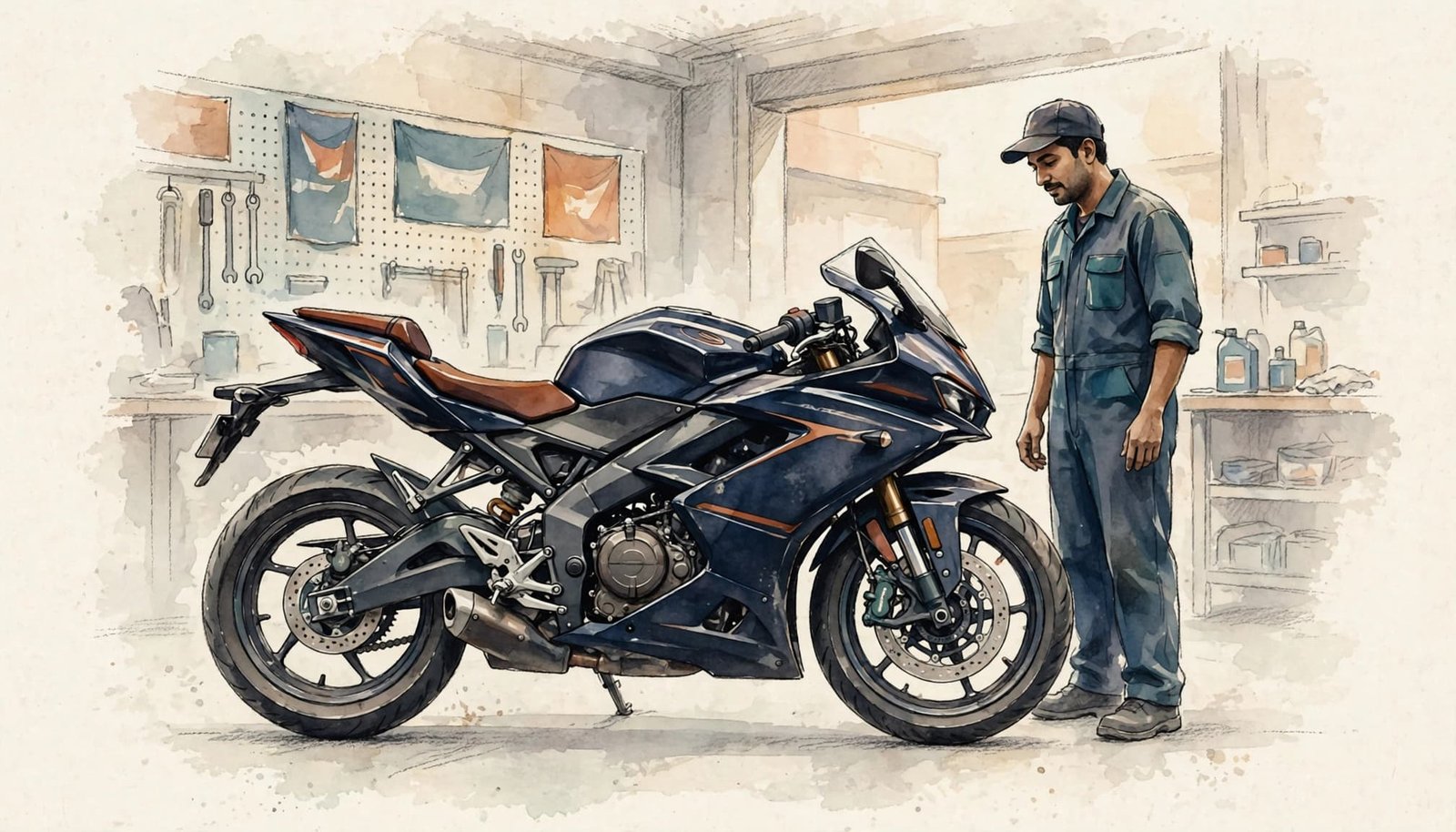
Match the condition to the asking price.
Have a mechanic examine the frame, suspension, tires, brakes, chain, and cooling system, and look for leaks or accident repairs. Check that the chassis and engine numbers match the RC. If a test ride is possible, pay attention to the clutch, gear shifts, and braking.
Get an estimate for any work due soon. Worn tires or an overdue major service should affect your offer and cash reserve, even if the lender approves the full amount you requested.
Reconstruct the service history.
Ask for dated invoices, service records, or a service book, then compare the dates and odometer readings with the seller’s account. If paper bills are missing, the seller may be able to share digital invoices or help you request authorized workshop or showroom records. Treat the vehicle maintenance history as verified only when you can corroborate it.
Several owners over a short period aren’t proof of a fault. They do justify closer questions about repairs and service continuity. Petroheadz’s pre-purchase checks for used superbikes can help you examine the bike alongside its records.
Verify ownership and clear any existing loan
A clean financing plan starts with a bike the seller can legally transfer. During vehicle verification, match the original registration certificate (RC) with the seller’s identity and the motorcycle’s numbers. Check the bike insurance papers and verify the policy details, Pollution Under Control certificate, and available service records. Ask about interstate registration early because an NOC or additional RTO steps may apply.
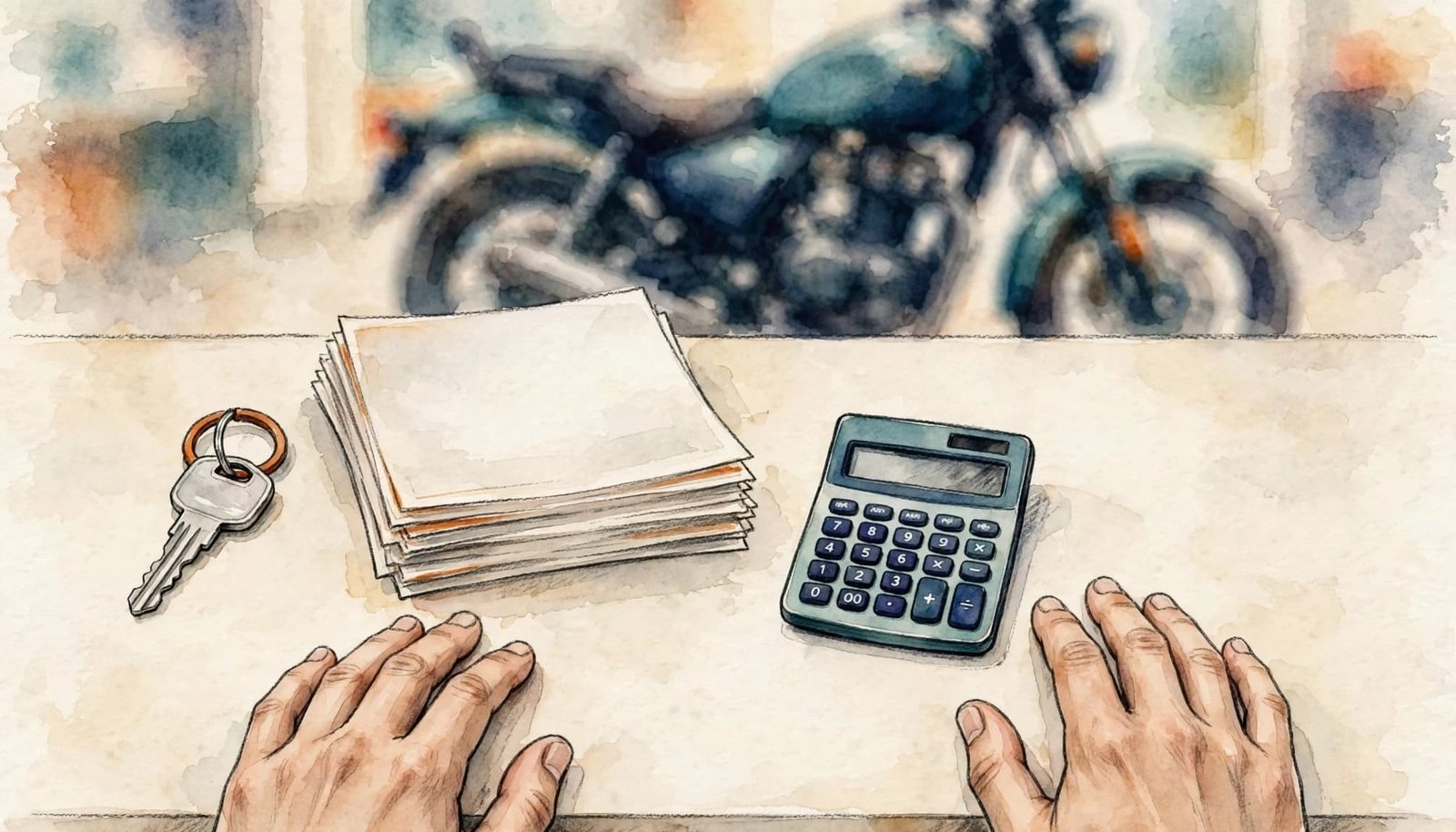
Keep evidence of the sale
The RC establishes registered ownership, but it doesn’t replace a clear record of your transaction. Ask for the original purchase invoice if available, and make a signed sale agreement or receipt stating the registration number, agreed price, payment details, and handover date. Confirm any additional invoice requirements with your lender and RTO.
A seller who refuses to show documents, arrange a reasonable inspection, or explain gaps in the history creates unnecessary risk. This matters even more in a peer-to-peer sale, where you must do more of the checking yourself.
Resolve hypothecation before transfer
As part of your hypothecation check, look for an active financier entry on the RC or in VAHAN vehicle details. If one appears, ask the seller for a current loan statement and a written plan for settlement. A verbal claim that the loan is paid isn’t enough.
Once dues are cleared, the seller needs the financier’s closure documents and must follow the applicable RTO process to remove hypothecation. Parivahan’s Form 35 for hypothecation termination is part of that process. If your payment will help settle the seller’s loan, arrange documented payment through the financier and confirm the transfer path before releasing the balance. Don’t assume an existing loan can simply pass to you.
Clear challans and complete the ownership transfer.
Before payment, check pending traffic challans through the official eChallan service and agree in writing that the seller will settle outstanding amounts. Keep the receipts. A challan check is useful, but it doesn’t replace RC, loan, and physical verification.
Put the payment and handover sequence in writing.
Agree on the price, deposit, loan disbursement, challan settlement, and document handover before money moves. Pay through traceable banking channels. Obtain a signed receipt for each payment, then record when you receive the keys, RC, insurance papers, and sale documents. A dealer assisting with the process should still give you a written transfer timeline.
Follow through with the RTO
The seller reports the sale using Form 29, while the buyer applies for ownership transfer using Form 30. Parivahan’s vehicle transfer forms let you check the required paperwork. Confirm the applicable process with the registering authority, especially for an interstate purchase.
For a transfer within the same state, the buyer’s Form 30 application is due within 14 days; for a vehicle registered outside the state, the period is 45 days. Track the application until the RC shows your name. Also arrange the insurance transfer or a suitable new policy rather than assuming the seller’s cover protects you unchanged.
Key Takeaways
- Set aside cash for the lender’s funding gap, insurance, and near-term maintenance, not only the down payment.
- Compare written loan offers by total repayment, fees, and prepayment rules as well as EMI.
- Verify the bike, clear any old hypothecation, and agree on a documented transfer sequence before paying the seller.
Frequently Asked Questions
Can I finance a superbike bought from a private seller?
Possibly. Ask the lender whether it finances private-party purchases and accepts the bike’s model, age, and registration details. A dealer-arranged offer may be easier to organize, but compare its written terms with direct offers.
Is the original purchase invoice mandatory?
Requirements vary by lender and RTO. The RC is essential for checking registered ownership, while an invoice can help establish the bike’s history. Keep a signed record of your own purchase even if the seller can’t produce the first sale invoice.
How do I find a reliable used superbike dealer nearby?
Shortlist second-hand bike dealers with a physical presence and inspect bikes in person where practical. Ask who verifies ownership, who arranges finance, and who follows up on the RC transfer. Compare those answers with private listings before choosing convenience over price. Petroheadz’s financing and ownership FAQs set out questions to ask when considering dealer support.
Conclusion
The right superbike should fit your finances after the first ride, not only on the day you sign. Compare the full repayment figure, leave room for ownership costs, and verify the motorcycle before committing to a loan.
Once the old loan status, payment terms, and transfer steps are clear, you can buy with far more confidence.
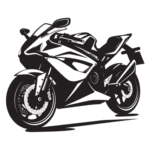 Sports Bike
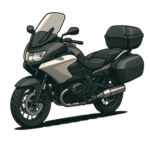 Touring
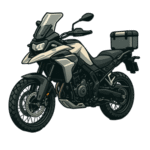 Adventure
 Urban/Classic Bikes
 Roadster
 Cruiser