Blog
Superbike Insurance in India: IDV, Add-Ons and Claims

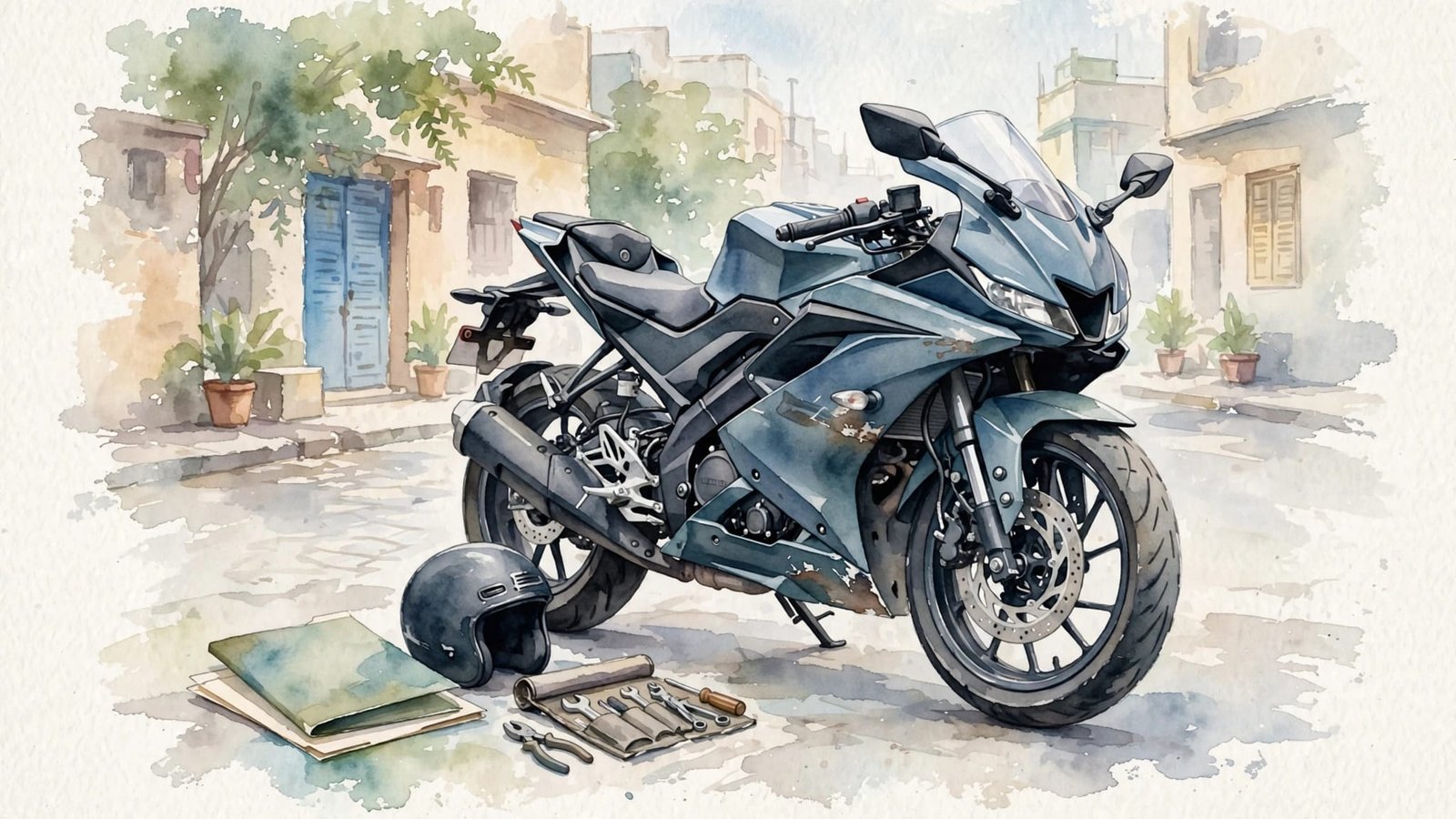
A dropped superbike can leave you paying for much more than a scratched fairing. When comparing superbike insurance in India, focus on repair cover, realistic IDV and claim conditions before chasing the lowest premium.
Your policy needs to match the exact motorcycle, its accessories and how you ride it. Start by separating the cover required by law from the protection that pays for damage to your own machine.
Key Takeaways
- Third-party insurance is compulsory for public-road use, but it doesn’t cover damage to your motorcycle.
- IDV matters most for theft and total-loss claims; it isn’t a guaranteed payout for every accident.
- Add-ons have eligibility rules, exclusions and limits, so check your policy schedule and wording.
- Notify the insurer promptly and get repair authorization before committing to major work.
What Superbike Insurance Covers in India
Third-party liability versus own damage
Section 146 of the Motor Vehicles Act requires third-party insurance when using a motorcycle in a public place. This covers specified legal liabilities involving other people, subject to the policy’s terms and conditions and applicable law.
However, third-party-only insurance cover won’t pay to repair your BMW S1000RR or replace a stolen Suzuki Hayabusa.
Own-damage cover protects the insured motorcycle against specified risks, commonly including accidents, theft, fire and natural calamities. A package policy combines third-party and own-damage protection. Alternatively, standalone own-damage insurance must sit alongside valid third-party cover.
If you’re attending the India Superbike Festival, don’t assume road cover extends to circuit riding. Check your policy and the event’s arrangements.
Check the expiry dates separately
A new two-wheeler’s bundled arrangement commonly includes one year of own damage and five years of third-party cover. Read the certificate and schedule because the two protections can expire on different dates.
A valid long-term third-party policy doesn’t mean your accidental-damage cover is still active.
Also check owner-driver personal accident cover and any pillion-related protection separately. Motorcycle damage insurance doesn’t automatically provide comprehensive medical cover for everyone riding.
Choosing IDV Without Undervaluing Your Bike
IDV and resale value are different
Insured Declared Value, or IDV, is the value used for theft and total-loss settlement under the policy. Standard wording bases it on the manufacturer’s listed selling price, adjusted for applicable age-related depreciation.
Don’t assume your purchase price, outstanding loan or asking price determines the payout. Accessories may also need separate declaration and valuation.
Compare the quoted IDV with the exact model, variant and age. If it looks unusually low, ask the insurer how it was calculated. Petroheadz’s guide to factors affecting superbike resale value helps explain market pricing, but resale estimates don’t override insurance terms.
Understand constructive total loss
Standard two-wheeler wording treats a motorcycle as a constructive total loss when retrieval and/or repair costs exceed 75% of IDV. Check that definition in your own contract.
For partial-damage claims, the insurer assesses admissible repairs rather than automatically paying IDV. Total-loss settlements can also involve deductibles and salvage adjustments, depending on the settlement arrangement.
Lowering IDV to reduce the premium can also reduce the value available for a theft or total-loss settlement.
Which Superbike Insurance Add-Ons Deserve Attention?
Zero depreciation reduces specific deductions
Zero-depreciation cover can reduce depreciation deductions on eligible replacement parts during an admissible repair claim. That matters when a motorcycle has expensive body panels or other high-value components.
However, it doesn’t guarantee payment of the entire garage bill. Deductibles, excluded items and limits can still apply.
Bajaj General Insurance’s zero-depreciation explainer describes this protection, but the terms and conditions of your purchased endorsement determine the actual benefit, including eligible parts, limits and exclusions. Ask about vehicle-age eligibility, claim-count limits and treatment of tyres, batteries and carbon-fibre parts. Zero depreciation doesn’t automatically remove age depreciation from total-loss valuation.
Match other add-ons to your riding
Availability varies by insurer, motorcycle and policy. Use these questions when comparing optional protection.
| Add-on | What to check |
|---|---|
| Engine protection | Which water-ingress or lubricant-loss damage is covered, and what actions can invalidate it? |
| Return to invoice | Which theft or total-loss events qualify, and which invoice components are included? |
| Consumables cover | Are fluids, fasteners and other consumables covered only during an admissible repair? |
| Roadside assistance | What are the towing distance, recovery limits and geographical restrictions? |
Return-to-invoice cover usually targets eligible theft or total-loss events, rather than ordinary repair bills. Engine protection also needs careful reading because standard own-damage policies commonly exclude mechanical breakdown and consequential damage.
For touring, check whether recovery reaches your planned route. A towing benefit with a short distance limit may leave a substantial bill far from a capable workshop.
Comparing Quotes for New and Pre-Owned Superbikes
Compare identical cover, not headline prices
Get quotations using the same IDV, deductibles and add-ons. Compare the policy wording and terms and conditions alongside price, since a cheaper option may offer less protection.
When checking ICICI Lombard’s two-wheeler insurance options or another insurer’s quotation, confirm acceptance of your exact model and variant. Quotes for 600cc bikes and 1000cc bikes depend on the model, variant and insurer assessment, not displacement alone. An online quote isn’t enough if the details don’t match your RC.
Check whether the insurer’s network includes suitable authorized dealers. Also confirm your preferred authorized dealers are active cashless partners for that insurer. Check OEM-parts approval, towing limits and any voluntary excess. Finally, compare the total payable premium rather than a displayed starting price.
A used purchase still needs careful cover
Buying pre-owned can reduce your acquisition cost, but it doesn’t make imported replacement parts cheaper. Keep insurance and maintenance costs within your superbike ownership budget. Account for your upgrade trajectory and an emergency repair reserve, too.
Before delivery, verify the RC, insurance status, chassis number, loan details, service history, service intervals and records of regular service. Petroheadz’s used superbike inspection checklist covers these purchase checks.
Arrange the insurer’s required ownership-transfer endorsement or fresh cover. Don’t rely on a seller’s assurance that comprehensive insurance or zero depreciation will automatically carry forward. The no-claim bonus belongs to the policyholder, so it isn’t simply inherited with the motorcycle.
Exclusions That Matter for Performance Motorcycles
Track use and modifications need separate checks
Road insurance doesn’t automatically cover track days, racing, speed testing or professional training courses. Read the limitations-of-use clause and terms and conditions before booking.
For a training session, including a course such as California Superbike School, check with your insurer whether the policy applies. Coverage may depend on the course and policy wording.
When planning around the India Superbike Festival, review the official entry form for event-specific restrictions. For riding at a circuit such as Madras Motor Race Track, verify the policy and event terms independently.
If an organizer advertises insurance cover, ask whether it applies to personal injury, third-party liability or motorcycle damage. Event protection may cover only one risk. For the India Superbike Festival, check the official entry form for what protection or responsibilities it describes. Read any waiver for participant responsibility, but don’t treat it as a substitute for insurance. Riding gear and training focused on safety and skill don’t establish insurance protection.
Declare modifications and valuable accessories, including exhausts, auxiliary lights and luggage. Ask how they’re recorded and insured. Approval to fit an accessory doesn’t automatically mean its replacement cost is covered.
Wear, misuse and maintenance remain your responsibility
Routine servicing, worn tyres and chain replacement aren’t accidental-damage claims. Follow the manufacturer’s service intervals and keep up with regular service. Check policy requirements, since standard policies commonly exclude mechanical or electrical breakdown, subject to any applicable add-on.
Riding without the required valid licence, intoxicated riding and prohibited use can create serious claim problems. Read those conditions before handing the bike to another rider.
For imported motorcycles, give the insurer the exact variant, manufacturing year and VIN. Don’t assume Indian-market specifications describe a privately imported bike. Keep repair and service records because they can help distinguish existing damage from the incident being claimed.
How to Make a Superbike Insurance Claim
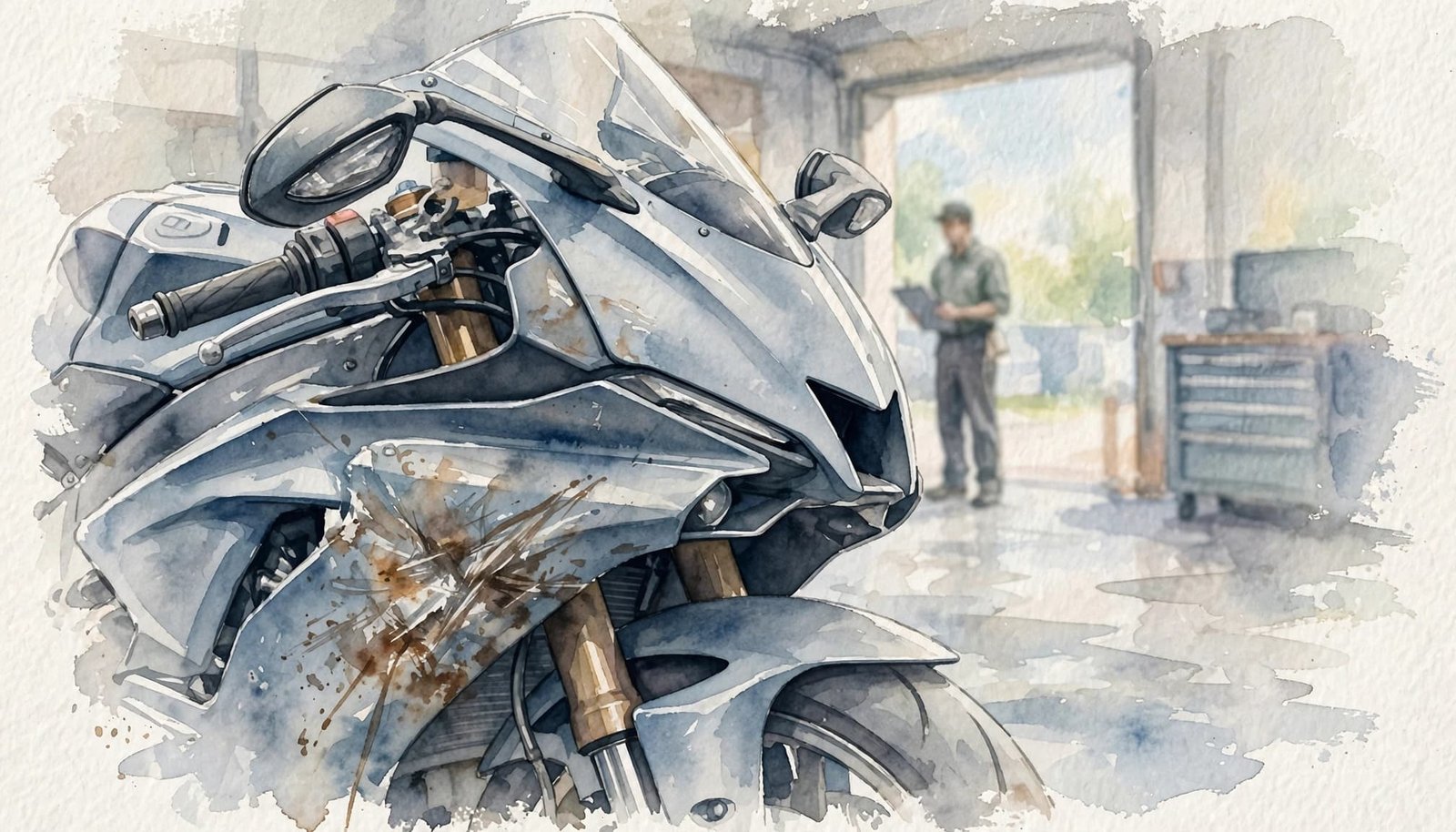
Document the incident before repairs
After addressing injuries and immediate safety, follow a clear sequence:
- Notify the insurer promptly through its prescribed claim channel and retain the claim reference. If the incident occurs during a California Superbike School course, follow the course’s reporting steps too.
- Photograph the motorcycle, damage and incident location when it’s safe.
- Arrange safe recovery and ask about survey or inspection requirements.
- Obtain repair authorization before the workshop starts substantial work.
If an incident occurs at the India Superbike Festival, notify your insurer promptly and follow its claim instructions. For theft, report the matter to the police promptly and inform the insurer. It may require an FIR, keys and further police documents.
Claim documents commonly include the RC, driving licence, policy details, estimate and invoices. For an event-related claim, retain relevant organizer records from the India Superbike Festival and a copy of the official entry form, if applicable. Requirements vary by incident and insurer, so ask for the applicable checklist rather than assuming every claim needs identical paperwork. Submit the official entry form only if the insurer requests it or it’s relevant to the incident. It doesn’t replace the insurer’s claim instructions or required documents.
Cashless claims still leave some costs payable
At an approved cashless garage, the insurer settles the accepted amount with the workshop. You still pay applicable deductibles and non-admissible expenses.
With reimbursement, you generally pay first and submit the required documents for assessment. Before authorizing repairs, clarify the approved amount, disputed items and expected payment arrangement.
If a flooded motorcycle won’t start, avoid repeated starting attempts and contact the insurer or recovery provider. Further damage may complicate assessment.
Cashless approval doesn’t mean every item in the workshop estimate has been accepted.
What to Do When a Claim Is Delayed or Disputed
Ask the insurer for a written explanation of deductions or rejection, including the relevant policy clauses. Keep photographs, estimates, survey-related correspondence and invoices together.
Next, raise a formal complaint with the insurer’s grievance officer and retain acknowledgement. A claim reference and a complaint reference aren’t necessarily the same.
IRDAI’s complaint guidance allows escalation if the insurer hasn’t resolved the complaint within two weeks, or its response is unsatisfactory. Bima Bharosa is IRDAI’s grievance platform; the Insurance Ombudsman is another route subject to its eligibility and process.
That complaint timeline isn’t a promise that every repair claim will settle within two weeks.
Choose Cover You Can Rely On
A low premium helps only when the policy still protects the risks you need covered. Prioritize a defensible IDV, suitable add-ons and a workable repair network.
Before buying or renewing, check your own policy documents for coverage, exclusions, depreciation and claim requirements. Clear terms matter far more than a reassuring sales description when your motorcycle needs repairs.
Frequently Asked Questions
Is comprehensive insurance compulsory for a superbike?
Third-party insurance is compulsory for public-road use. Own-damage cover is generally optional under motor insurance law, although a lender can require it contractually. For a high-value motorcycle, check both the legal requirement and your finance agreement before choosing third-party-only protection.
Does zero depreciation cover every replacement part?
No. Coverage depends on the endorsement, eligible parts, limits and exclusions. Deductibles can remain payable, and the add-on doesn’t automatically change total-loss valuation. Ask for written clarification if tyres, carbon-fibre components or other expensive parts are important to your decision.
Will insurance pay the outstanding loan after theft?
The loan balance doesn’t determine the insurance settlement. Payment follows IDV and applicable policy terms, unless an eligible add-on changes the basis. If the approved settlement is below the loan balance, you may still owe the lender money.
 Sports Bike
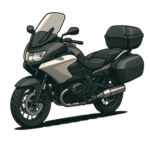 Touring
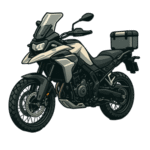 Adventure
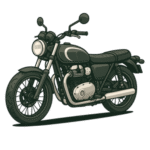 Urban/Classic Bikes
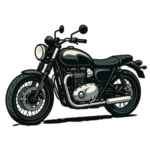 Roadster
 Cruiser