Buying Tips

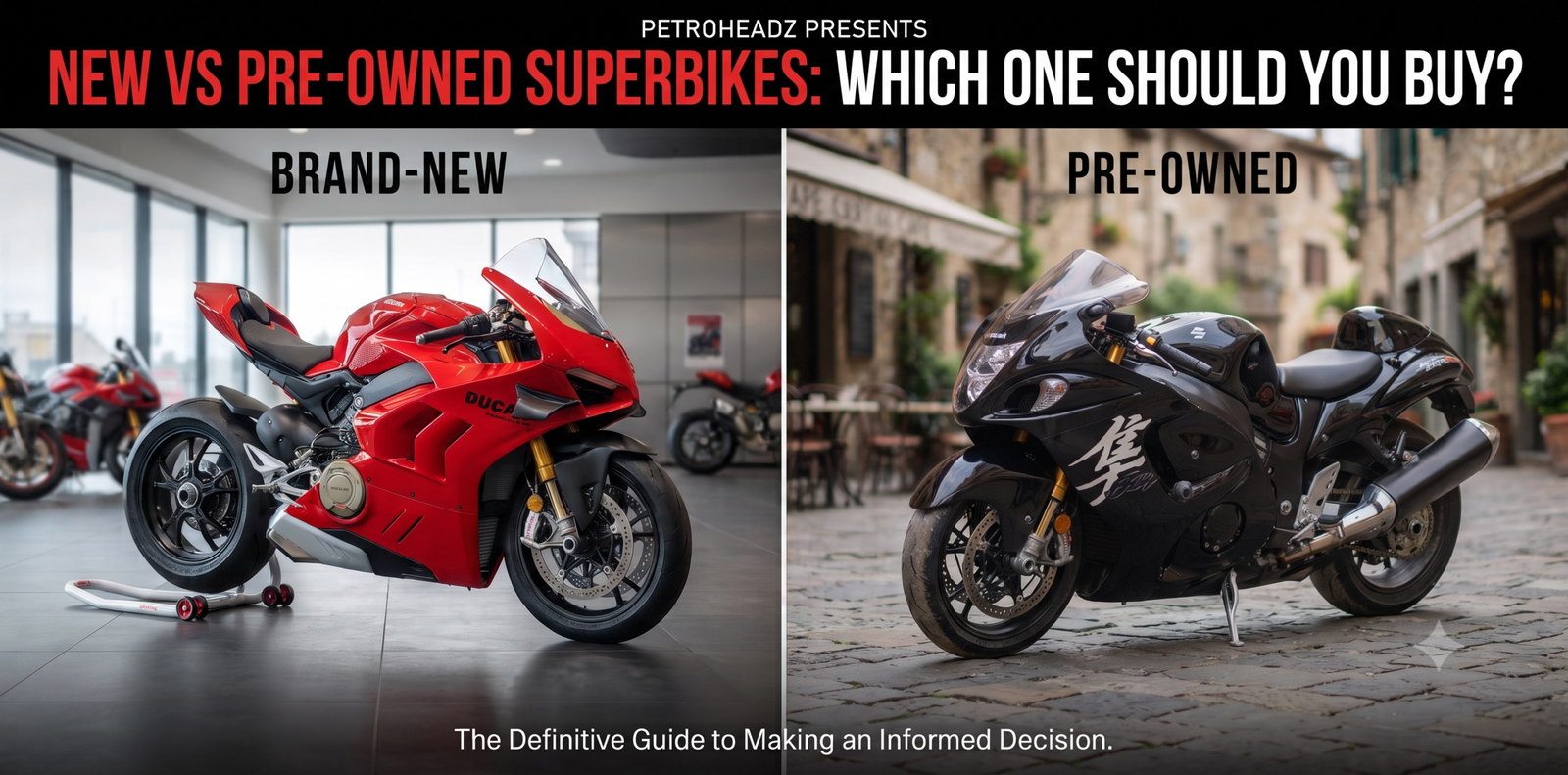
New vs Pre-Owned Superbikes: Which One Should You Buy?

Pre-Owned Superbikes

Choosing between new vs pre-owned superbikes usually comes down to one question: do you want the certainty of a warranty, or the value of a lower price tag? Both answers are correct — depending on your budget, how mechanically confident you are, and how long you plan to keep the bike.

A new superbike gives you full warranty coverage, the latest tech, and zero unknown history. A pre-owned one can save you ₹1–4 lakh on the same model, but shifts the burden of inspection and risk onto you. This guide breaks down the real costs, risks, and trade-offs of each option so you can decide with your eyes open, not just your wallet.


Quick Summary: New vs Pre-Owned at a Glance

Key Takeaway: Buy new if you want warranty coverage, the latest features, and zero history risk. Buy pre-owned if you want to save 20–40% on price and are comfortable inspecting the bike thoroughly or hiring a mechanic to do it.

Factor New Superbike Pre-Owned Superbike
Price Full showroom price 20–40% lower, depending on age/condition
Warranty 2–5 years (brand-dependent) Often expired or limited/transferable
History Risk None Accident, flood, or tampering risk exists
Customization Factory-fresh, no wear May already have aftermarket parts installed
Waiting Period Can be long for popular models Immediate availability
Loan Interest Rate Lower (new vehicle loans) Slightly higher (used vehicle loans)
Depreciation Hit Steepest in year 1 Already absorbed by previous owner

Total Cost of Ownership Comparison

Sticker price is only part of the story. Total cost of ownership includes depreciation, insurance, maintenance, and financing costs over the years you own the bike.

Example: Kawasaki Ninja 650 (Illustrative)

Cost Component New (Year 0) 2-Year-Old Pre-Owned
Purchase Price ₹7.2L (on-road) ₹5.3L
First-Year Insurance ₹35,000–₹45,000 ₹25,000–₹32,000
Warranty Coverage Included Usually expired
Expected Service Cost (Year 1) Covered under warranty ₹8,000–₹15,000 out of pocket
Depreciation by Year 3 ~35–40% of original price Already priced in

The pre-owned bike is cheaper upfront, but you inherit maintenance costs the original owner would have absorbed under warranty. A new bike costs more initially, but that gap narrows once you factor in the used bike's servicing and potential repair costs.

Depreciation: How Fast Superbikes Lose Value

Superbikes depreciate faster than most cars in the first two years, then level off.

  • Year 1: 15–20% drop from on-road price
  • Year 2: Additional 10–15% drop
  • Year 3 onward: Depreciation slows to 5–8% per year

This is exactly why pre-owned superbikes 2–3 years old often represent the sweet spot — the previous owner absorbed the steepest depreciation, and you're buying at a price much closer to the bike's realistic long-term value.

Pro Tip: If you plan to sell within 2 years, buying pre-owned protects you from taking the biggest depreciation hit yourself.


Warranty and Peace of Mind

New superbikes typically come with:

  • Standard manufacturer warranty (2–3 years, varies by brand)
  • Optional extended warranty (up to 5 years on some brands)
  • Free scheduled services for the warranty period

Pre-owned superbikes may still have:

  • Remaining manufacturer warranty, if bought within the original warranty window — always verify this with the brand's service center, not just the seller's word
  • Extended warranty, if the previous owner purchased and it's transferable
  • No warranty at all, if the bike is 3+ years old

Quick Answer: A pre-owned superbike can still carry factory warranty if it's less than 2–3 years old and the original owner didn't already use up mileage or time limits — always confirm directly with an authorized service center.

Risk Factors With Pre-Owned Superbikes

  • Unknown maintenance history — even with a service book, some work may have been done at unauthorized garages with non-genuine parts.
  • Accident or flood damage — not always disclosed, and not always visible without a trained inspection.
  • Odometer tampering — harder to detect on bikes without well-documented service history.
  • Hidden loans (hypothecation) — a bike bought without checking this can become a legal headache later.

These risks are manageable with the right due diligence (see our detailed guide on used superbike inspection), but they don't exist at all when buying new.

When Buying New Makes More Sense

  • You want the latest features: quick-shifters, updated electronics, newer Euro/BS emission compliance, updated ergonomics.
  • You plan to keep the bike long-term (5+ years) and want full warranty coverage throughout the ownership-critical early years.
  • You want to choose your own color, accessories, and configuration from day one.
  • You're risk-averse and don't want to deal with inspecting someone else's maintenance history.
  • You qualify for low-interest new-vehicle financing that narrows the price gap.

When Buying Pre-Owned Makes More Sense

  • Your budget is fixed and a pre-owned bike gets you into a higher-spec model than you could afford new.
  • You're comfortable inspecting mechanicals yourself or hiring a trusted mechanic for a pre-purchase check.
  • You plan to modify the bike anyway (exhaust, ergonomics, paint) — so "factory fresh" matters less to you.
  • You want to avoid the steepest first-year depreciation hit.
  • You need the bike immediately and don't want to wait through a new-bike booking queue.

Financing: New vs Used Superbike Loans

Factor New Bike Loan Used Bike Loan
Interest Rate Typically 8–11% Typically 11–16%
Loan-to-Value Up to 85–90% of on-road price Usually 60–75% of assessed value
Tenure Up to 5 years Usually capped at 3–4 years
Documentation Standard KYC + income proof Same, plus RC/insurance verification

Used bike loans cost more per rupee borrowed, so if you're financing rather than paying cash, run the actual EMI numbers before assuming pre-owned is automatically cheaper overall.

Insurance Cost Differences

  • New bikes need comprehensive insurance (mandatory in the first year in most cases) — higher premium but full coverage.
  • Pre-owned bikes can be insured comprehensively or third-party only, giving buyers more flexibility to manage premium costs.
  • Insured Declared Value (IDV) is naturally lower on a pre-owned bike, which reduces the premium but also reduces your payout in a total-loss claim.

Resale Value Comparison

Generally, popular models (Royal Enfield 650 twins, KTM Duke/RC series, Kawasaki Ninja series) hold resale value better than niche imports due to parts availability and service network reach. If resale value matters to your decision:

  • New bikes of popular models retain 60–65% of value after 3 years.
  • Pre-owned bikes of the same models, bought at year 2, often retain 80%+ of their purchase price (not original price) after another 2 years, because the steep early depreciation is already behind them.

Expert Recommendation by Buyer Type

Buyer Type Recommendation
First-time superbike owner, risk-averse New — warranty protection matters most while you're still learning the bike
Experienced rider, mechanically confident Pre-owned — you can inspect and negotiate effectively
Budget-conscious buyer wanting a higher-spec model Pre-owned, 2–3 years old
Buyer planning to keep the bike 5+ years New, for full warranty-period coverage
Buyer planning to flip/sell within 2 years Pre-owned, to avoid steepest depreciation

Leave a Reply

Your email address will not be published. Required fields are marked *